
Anida Yoeu Ali
artist event
The Red Chador: Genesis I
Saturday, September 11
12 – 3 pm
Performance begins and ends at Bellevue Arts Museum
RSVP for the event on Facebook
Performers: Anida Yoeu Ali, Sabreen Akhter, Naomi Macalalad Bragin, Tye Jones, Robert Farid Karimi, Soraya Sultan Meer & Erin Shigaki
Tacoma, WA
Battambang, Cambodia
Chicago, IL
On view at the Bellevue Arts Museum
Performance on Saturday, September 11 at Bellevue Arts Museum and around Bellevue
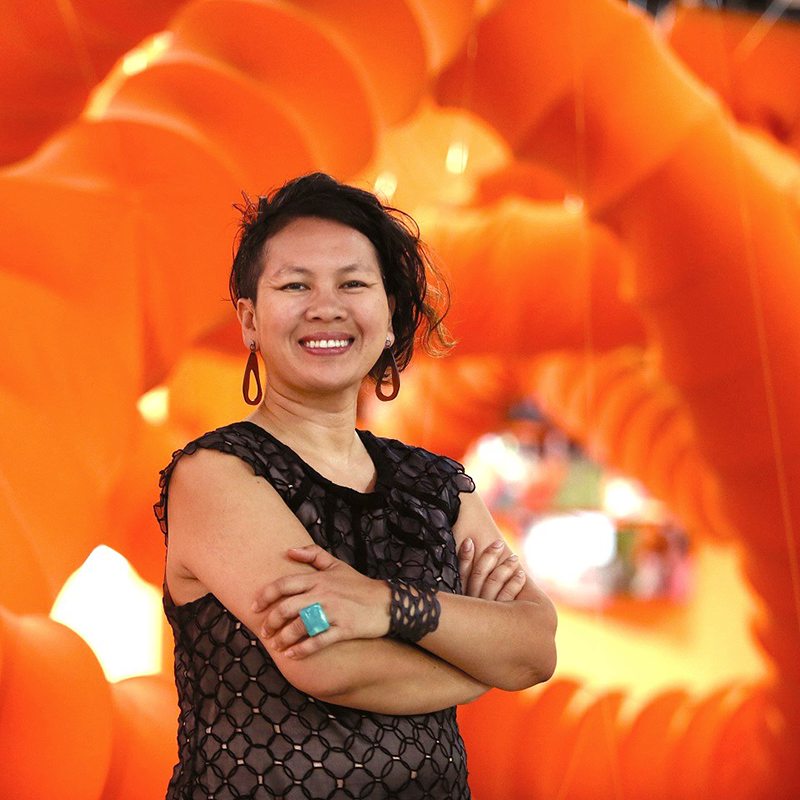
Anida Yoeu Ali is an artist, educator and global agitator born in Cambodia, raised in Chicago, and transplanted to Tacoma. Ali’s multidisciplinary practices include performance, installation, videos, images, public encounters, and political agitation. Utilizing an interdisciplinary approach to art-making, her installation and performance works investigate the artistic, spiritual, and political collisions of a hybrid transnational identity. Ali has performed and exhibited at the Palais de Tokyo, Musée d’art Contemporain Lyon, Malay Heritage Centre, Fukuoka Asian Art Museum, Shangri-La Museum of Islamic Art, Culture and Design, and Queensland Art Gallery. She has received grants from the Rockefeller Foundation, Ford Foundation, Art Matters Foundation and the US Fulbright Fellowship. Ali earned her BFA from the University of Illinois Urbana-Champaign and an MFA in from the School of the Art Institute Chicago. Currently Ali serves as an Artist-in-Residence at the University of Washington, Bothell where she teaches art, performance, and global studies courses. Ali, a founding partner of Studio Revolt, spends much of her time traveling and working between the Asia-Pacific region and the United States.
The Red Chador: Genesis I
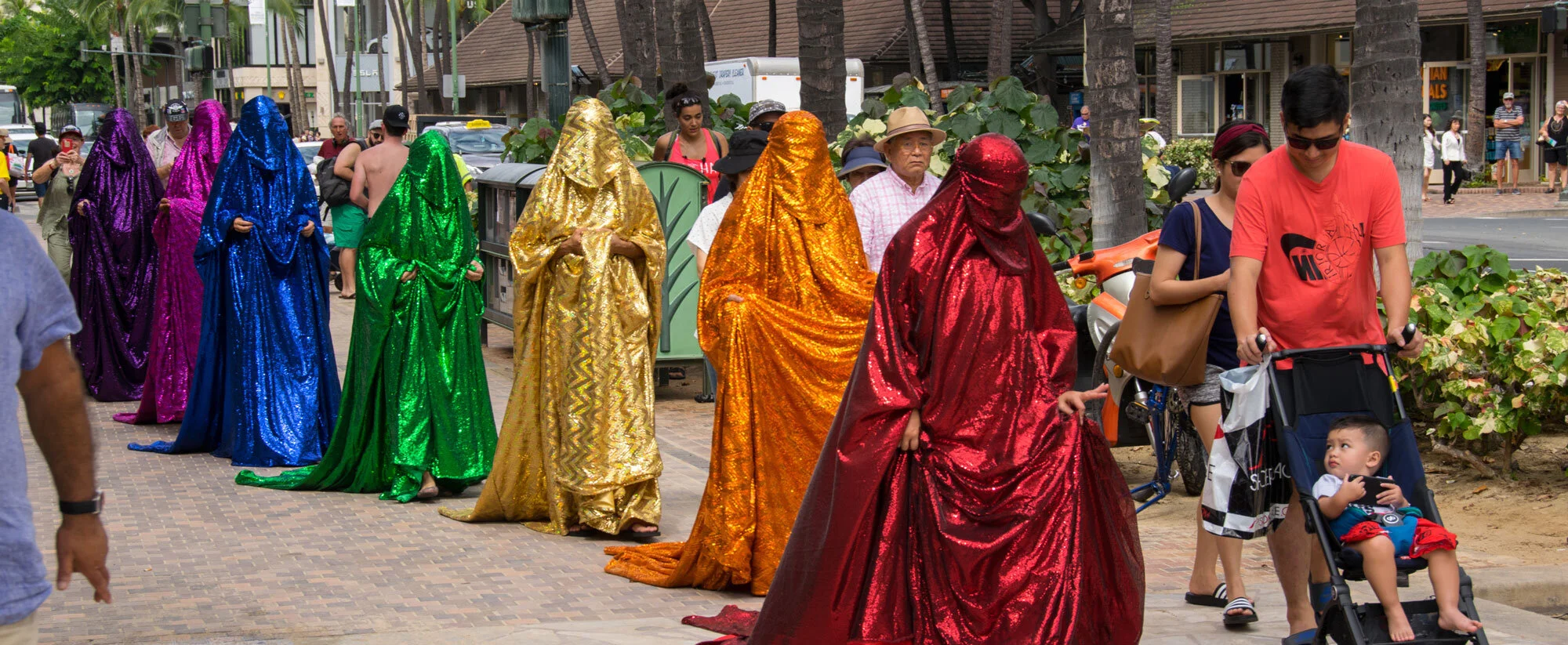
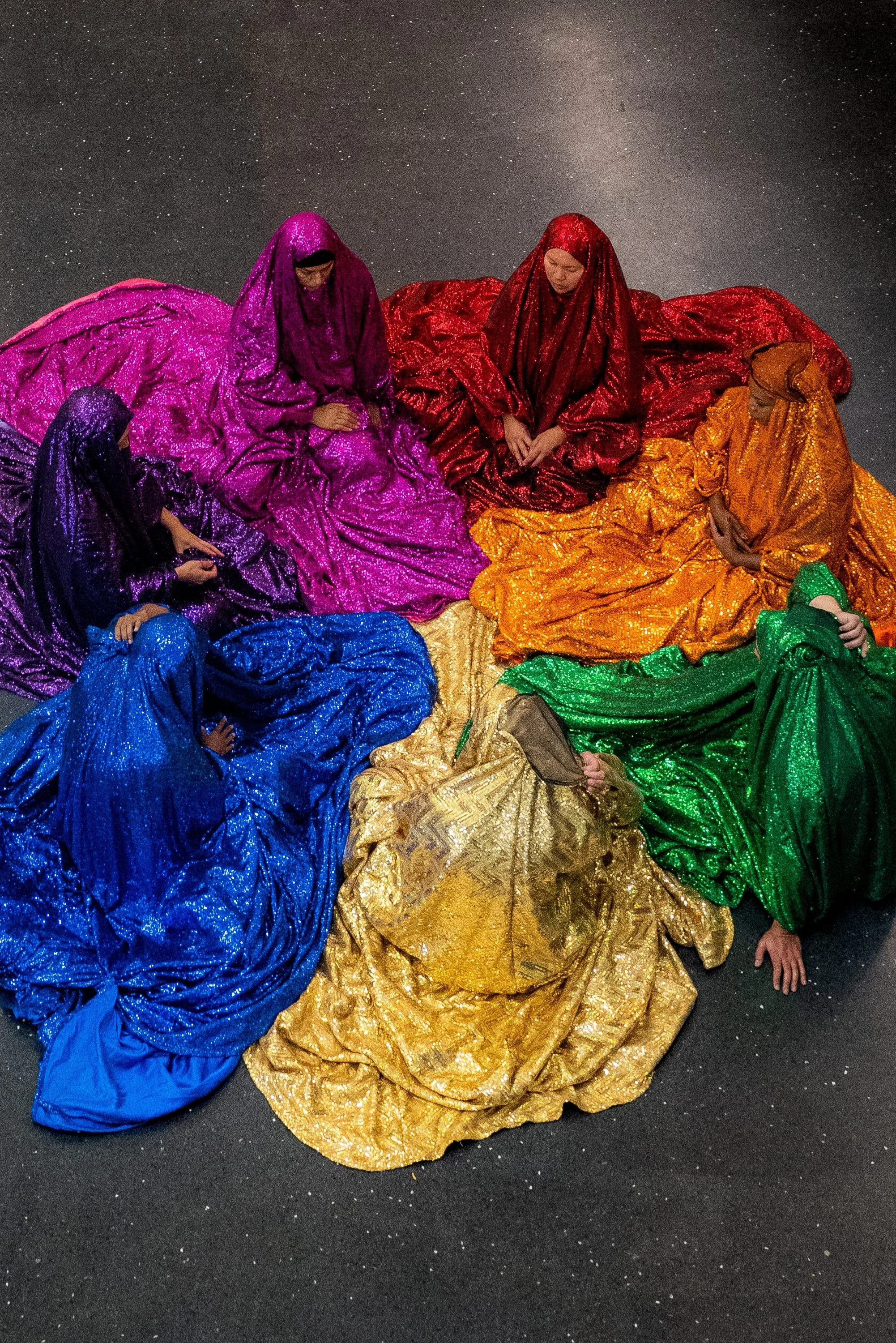
The Red Chador: Genesis I is a reimagined performance by Anida Yoeu Ali that engages public spaces both outdoors and indoors bringing a hyper-visibility to both issues of Islamophobia and homophobia. The Red Chador series continues Ali’s thematic interest in using religious aesthetics to provoke ideas of otherness. Cloaked in unique long sequin chadors or “Muslim” headdresses, Ali, along with six other performers, silently encounter an “unsuspecting” public in small acts of interventions that challenge the public’s perception and fears of the other. Together, all seven performers, or chadoras, create a moving rainbow spectrum—an intentional colorful spectacle—to reclaim the gaze of the Muslim woman. This iteration for the Bellwether Festival includes a large-scale video projection (a nine minute looped original short film) inside the museum’s gallery space.
The performance itself begins with the seven chadoras inside the museum and ends with the performers in a procession in and around the city blocks of Bellevue. The goal is to perform a public durational walk—a colorful procession—similar to previous other iterations where fully veiled bodies traverse public streets, plazas, and parks as well as enter shops, malls, and institutional landmarks such as the Bellevue Art Museum. This performance on the twentieth anniversary of 9/11 marks an important political moment in which historically othered bodies reclaim spaces and the gaze of the public through their hyper-visible presence.